
Why Medical Billing Is Important in Healthcare
The healthcare industry provides millions of treatments and medical services every day. Every time a patient visits a hospital, clinic, or healthcare provider, records are created about the diagnosis, treatment, and procedures performed. These records must be organized properly so healthcare providers can receive payment for their services. This is where medical billing becomes an essential part of the healthcare system.
Medical billing is a key administrative process that connects healthcare providers, patients, and insurance companies. Without a proper healthcare billing process, hospitals and clinics would struggle to receive payments for the services they provide. The medical billing system ensures that treatments are documented correctly and insurance claims are processed efficiently.
When a patient receives medical care, the treatment details are converted into standardized codes through medical coding. These codes are then used to create insurance claims. Medical billing professionals manage these claims and submit them to insurance companies for payment. Medical billing in healthcare ensures that hospitals, doctors, and clinics receive the correct reimbursement for their services. It also helps maintain accurate patient records and healthcare documentation. Because the healthcare industry is growing rapidly, many people are now interested in learning about medical billing careers. Training programs in medical billing are shorter compared to many other healthcare professions, which makes this field attractive for beginners.
In this beginner guide, you will learn what medical billing is, how the medical billing process works, what a medical billing specialist does, and how you can start a career in medical billing. f you want to start a career in this field, explore our guide on online medical billing and coding certification programs
What Is Medical Billing in Healthcare?
Medical billing is the process of submitting healthcare claims to insurance companies so healthcare providers can receive payment for medical services. It is an important part of the healthcare billing process that ensures doctors, hospitals, and clinics are paid for the treatments they provide.
When a patient visits a healthcare provider, the doctor records the diagnosis and procedures performed during the visit. This information is then converted into standardized codes through medical coding. These codes help insurance companies understand what treatment was provided.
Once the coding process is completed, the medical billing specialist prepares an insurance claim. The claim includes patient information, healthcare service details, and medical codes related to the treatment. The claim is submitted electronically through the medical billing system to the insurance provider. The insurance company reviews the claim and decides how much payment should be made for the healthcare service. If the claim is approved, the insurance company sends payment to the healthcare provider. If there is an issue with the claim, it may be rejected or returned for correction.
Medical billing services help healthcare providers manage patient billing, insurance claims, and payment processing. Without an effective medical billing system, hospitals and clinics would face serious financial challenges.
How the Medical Billing Process Works (Step-by-Step)
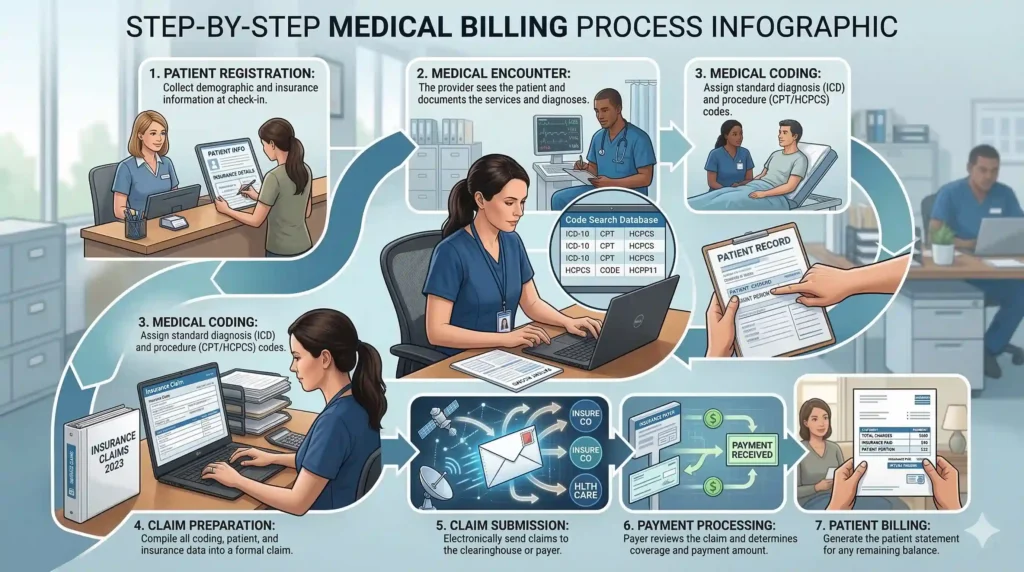
The medical billing process includes several steps that ensure healthcare providers receive payment for medical services. Each step is important in the healthcare billing process.
Patient Registration
The first step in the medical billing process begins when a patient schedules an appointment or visits a healthcare facility. During patient registration, important information is collected, including the patient’s name, contact details, and insurance information.
Accurate patient information is important because incorrect details can cause problems during the insurance claim process.
Medical Coding
After the patient receives treatment, the healthcare provider documents the diagnosis and medical procedures performed. This information is then converted into standardized codes through medical coding. Medical coding specialists use coding systems to translate medical procedures and diagnoses into codes that insurance companies can understand.
Medical coding and billing work together because these codes are used to create insurance claims.
Insurance Claim Submission
Once coding is completed, the medical billing specialist prepares the insurance claim using the coded information. The claim contains details about the patient, the healthcare provider, and the medical services provided.
The claim is submitted electronically to the insurance company through the medical billing system.
Claim Review and Payment Processing
After receiving the claim, the insurance company reviews it carefully to ensure that the treatment is covered under the patient’s insurance policy. If everything is correct, the insurance company processes the payment and sends reimbursement to the healthcare provider.
Sometimes the insurance company may pay only part of the claim, and the remaining balance may be billed to the patient.
Billing Follow-Up
Not all insurance claims are approved immediately. Sometimes claims are rejected due to errors, missing information, or insurance coverage issues. In these cases, the medical billing specialist must review the claim, correct the problem, and resubmit the claim to the insurance company.
This follow-up process ensures that healthcare providers eventually receive payment for the services they provide.
Who Is a Medical Billing Specialist?
A medical billing specialist is a professional responsible for managing healthcare billing processes and insurance claims. These professionals work in hospitals, clinics, healthcare offices, and medical billing companies.
The main responsibility of a medical billing specialist is to ensure that healthcare providers receive payment for medical services.
Medical billing specialists review patient records, verify insurance information, prepare insurance claims, and submit them to insurance companies. They also communicate with insurance providers when claims are delayed or rejected. Medical billing specialists must understand healthcare billing systems, insurance policies, and medical documentation. They also need strong attention to detail because small mistakes in billing information can delay payment.
Many professionals start their careers in medical billing after completing training programs in healthcare administration or medical billing services.
Medical Billing vs Medical Coding
Medical billing and medical coding are closely related but involve different responsibilities in the healthcare system. Medical coding focuses on translating medical diagnoses and procedures into standardized codes. Medical coders review medical records and assign the correct codes to treatments and procedures.
Medical billing, on the other hand, focuses on submitting insurance claims and managing payment processes. Medical billing specialists use the codes created by medical coders to prepare insurance claims.
Both roles are essential in the healthcare billing process. Many healthcare facilities employ professionals who specialize in both medical coding and medical billing. Medical coding certification programs from AAPC.

Tools and Software Used in Medical Billing
Medical billing professionals use specialized tools and software to manage patient records and insurance claims. These tools help healthcare providers process medical documentation and billing information more efficiently. Common tools used in medical billing include electronic health record systems, billing software, and insurance claim management platforms.
Electronic health record systems allow healthcare providers to store patient medical records digitally. Medical billing software helps prepare insurance claims and manage patient billing information. Insurance claim management systems help track claims submitted to insurance companies and monitor payment status.
Students who learn medical billing services often receive training on these systems during their education.
Skills Needed to Become a Medical Billing Specialist
A successful career in medical billing requires both technical knowledge and professional skills. Medical billing specialists must understand healthcare documentation and insurance claim processing. Important skills include attention to detail, knowledge of medical terminology, and strong computer skills. Medical billing specialists must also have good communication skills because they often communicate with insurance companies and healthcare providers.
Problem-solving skills are also important because billing specialists must identify and correct errors in insurance claims.
Medical Billing Career Opportunities
Medical billing professionals have several career opportunities in the healthcare industry. Hospitals, clinics, insurance companies, and healthcare service providers all require trained billing specialists. Common job roles include medical billing specialist, insurance claims specialist, medical records technician, and healthcare billing coordinator.
Many healthcare outsourcing companies also hire professionals trained in medical billing services to manage insurance claims for hospitals and clinics. Because healthcare services continue to grow, the demand for professionals in medical billing in healthcare remains strong. health information management resources from AHIMA.
How to Start a Career in Medical Billing
Starting a career in medical billing is possible through proper training and education. Many beginners begin by enrolling in training programs related to healthcare billing and medical billing services.
The first step is learning the fundamentals of medical billing and the healthcare billing process. Many online courses and training programs teach the basics of medical billing systems and insurance claim processing.
After completing training, students can apply for entry-level roles in hospitals, clinics, or healthcare administration offices.
With experience, professionals can advance to specialized roles in healthcare billing management or medical documentation systems.
Choosfy.com is a growing platform where you can explore useful AI tools, and alsoFree Ai Tools, simple tech guides, and the latest AI updates. If you want to learn more about AI tools, just search Choosfy.com in Google. You can also check our free AI tools list and discover more helpful posts on our website.
Recommended Articles
- Most People Use AI Tools Wrong — Try These 4 Simple Tricks Instead
- Free AI Tools List 2026: Best Free AI for Video, Image, and Productivity
- AI Tools for Students: Study Faster and Smarter in 2026
- Hidden AI Tools 2026: Powerful New AI Tools Most People Don’t Know
- Make Money with AI: Free AI Tools That Can Help You Earn Online
- How to Get Premium AI Features for Free in 2026
- How to Access Gemini AI Premium Features Free
- 10 Practical Problems ChatGPT Can Solve Better Than a Professional
- How to Use ChatGPT in 2026: Beginner to Advanced Guide
- AI Tools for Handwriting Notes Free in 2026
- AI Trip Planner India
- 20 Best Free AI Content Generator Tools in 2026
- Claude Code 2.0: The AI Coding Assistant Developers Are Switching To
FAQs About Medical Billing
Is medical billing difficult to learn?
Medical billing can be challenging at first because it involves healthcare documentation and insurance claim processing. However, with proper training and practice, beginners can learn the medical billing process successfully.
Can medical billing be learned online?
Yes. Many training programs and online courses teach the fundamentals of medical billing and healthcare billing systems.
Is medical billing a good career?
Medical billing is considered a stable career because healthcare providers always need professionals who can manage insurance claims and patient billing processes.

I am Md Amon Sk, a Website Developer with 2 years of experience. As part of the Choosfy Team, I focus on building quality websites and sharing the latest insights on AI tools.
1 thought on “What Is Medical Billing? Complete Beginner Guide- Process, Career, and Salary”
Comments are closed.