
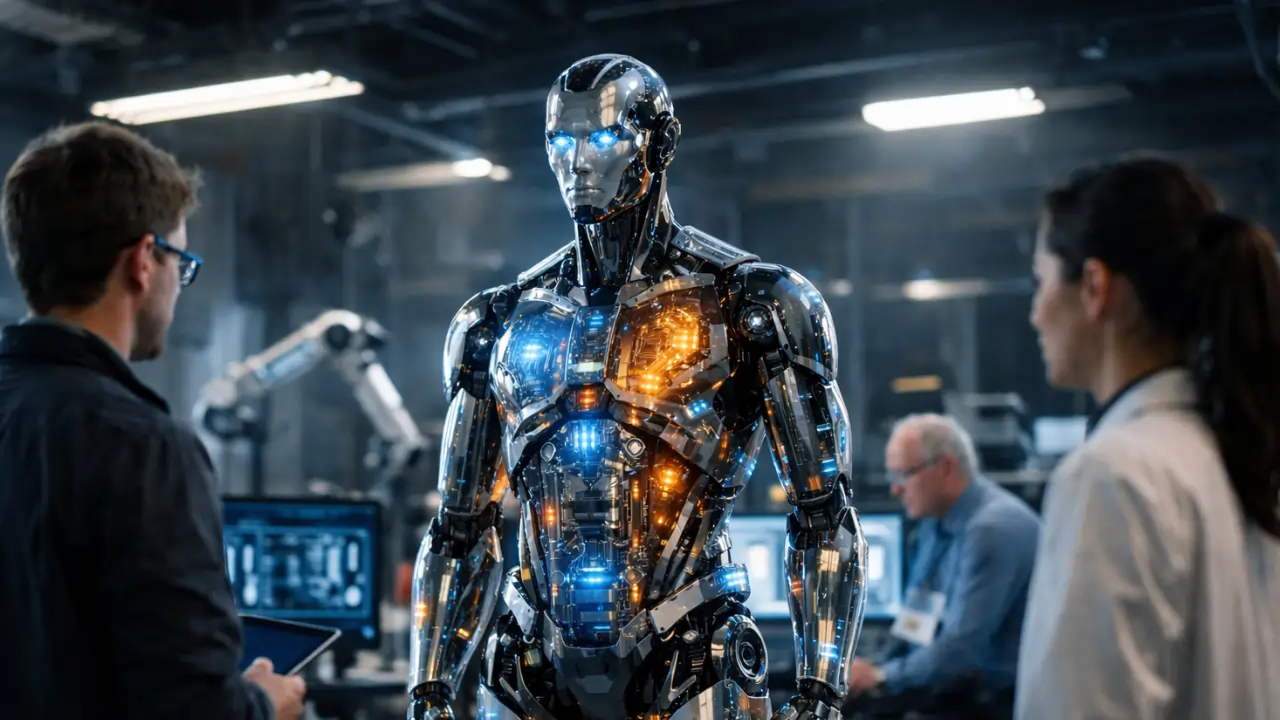
Artificial intelligence is rapidly moving beyond software and into the physical world. Major technology companies including
NVIDIA,
Tesla,
Alphabet, and
Amazon
are investing billions of dollars into what experts call Physical AI—a new generation of artificial intelligence designed to power robots, autonomous machines, and smart devices that interact directly with the real world.
Unlike traditional AI systems that exist only in software, physical AI combines machine learning with robotics, sensors, and real-time decision-making. The technology could transform industries ranging from manufacturing and logistics to healthcare, transportation, and smart homes.
What Is Physical AI?
Physical AI refers to artificial intelligence systems that can perceive, understand, and act in the physical environment. These systems rely on sensors, computer vision, robotics, and advanced machine learning models to interpret real-world data and perform complex tasks.
Examples of physical AI include autonomous vehicles, warehouse robots, humanoid assistants, and AI-powered industrial machines. By combining digital intelligence with physical capabilities, these systems can interact with the world in ways traditional software cannot.
Why Tech Companies Are Investing Billions
The global race to develop physical AI has intensified as technology companies recognize its enormous economic potential. Robotics and AI-powered automation could dramatically increase productivity while reducing operational costs across multiple industries.
Companies are investing heavily in AI chips, robotics platforms, and simulation tools that help train intelligent machines. For example, advanced AI models can be trained in virtual environments before being deployed in real-world robots, improving safety and efficiency.
Industry analysts believe the global robotics and automation market could reach hundreds of billions of dollars within the next decade as demand for intelligent machines continues to grow.

Key Industries That Physical AI Could Transform
Physical AI is expected to reshape several major sectors of the global economy.
- Manufacturing: Intelligent robots can perform complex assembly tasks with high precision.
- Logistics: Autonomous robots and drones can improve warehouse operations and delivery systems.
- Healthcare: AI-powered robots may assist in surgery, rehabilitation, and patient care.
- Transportation: Self-driving vehicles rely heavily on physical AI technologies.
- Smart Homes: AI-powered household robots could assist with daily tasks.
As these technologies mature, they could significantly reshape how businesses operate and how people interact with machines.

The Role of Simulation and AI Training
Training robots to function safely in the real world is extremely complex. To solve this challenge, many companies use advanced simulation environments where AI systems can learn through millions of virtual scenarios.
These digital simulations allow engineers to test robotic behavior, optimize machine learning models, and reduce the risks associated with deploying autonomous machines in real environments.
Challenges Facing Physical AI Development
Despite rapid progress, physical AI still faces several technical and regulatory challenges. Developing machines that can reliably operate in unpredictable real-world environments requires advanced perception systems and robust safety mechanisms.
Ethical concerns are also emerging around automation and job displacement. As robots become more capable, policymakers and industry leaders are exploring strategies to ensure that AI-driven automation benefits society as a whole.
The Future of AI-Powered Machines
Many experts believe physical AI could become one of the most transformative technologies of the next decade. Advances in robotics, AI chips, and machine learning are accelerating the development of intelligent machines capable of performing tasks that once required human labor.
In the coming years, we may see autonomous factories, AI-powered logistics networks, and even humanoid robots assisting people in everyday environments. The massive investments by major technology companies suggest that physical AI will play a central role in the future of the global economy.
Conclusion
The surge of investment in physical AI marks a major shift in the evolution of artificial intelligence. By combining advanced AI with robotics and real-world interaction, technology companies are laying the groundwork for a future where intelligent machines operate alongside humans across multiple industries.
While challenges remain, the development of physical AI could redefine automation, productivity, and innovation in the years ahead.
I am Md Amon Sk, a Website Developer with 2 years of experience. As part of the Choosfy Team, I focus on building quality websites and sharing the latest insights on AI tools.
4 thoughts on “Tech Giants Are Betting Billions on Physical AI — What It Means for the Future of Robotics and Automation”
Comments are closed.