
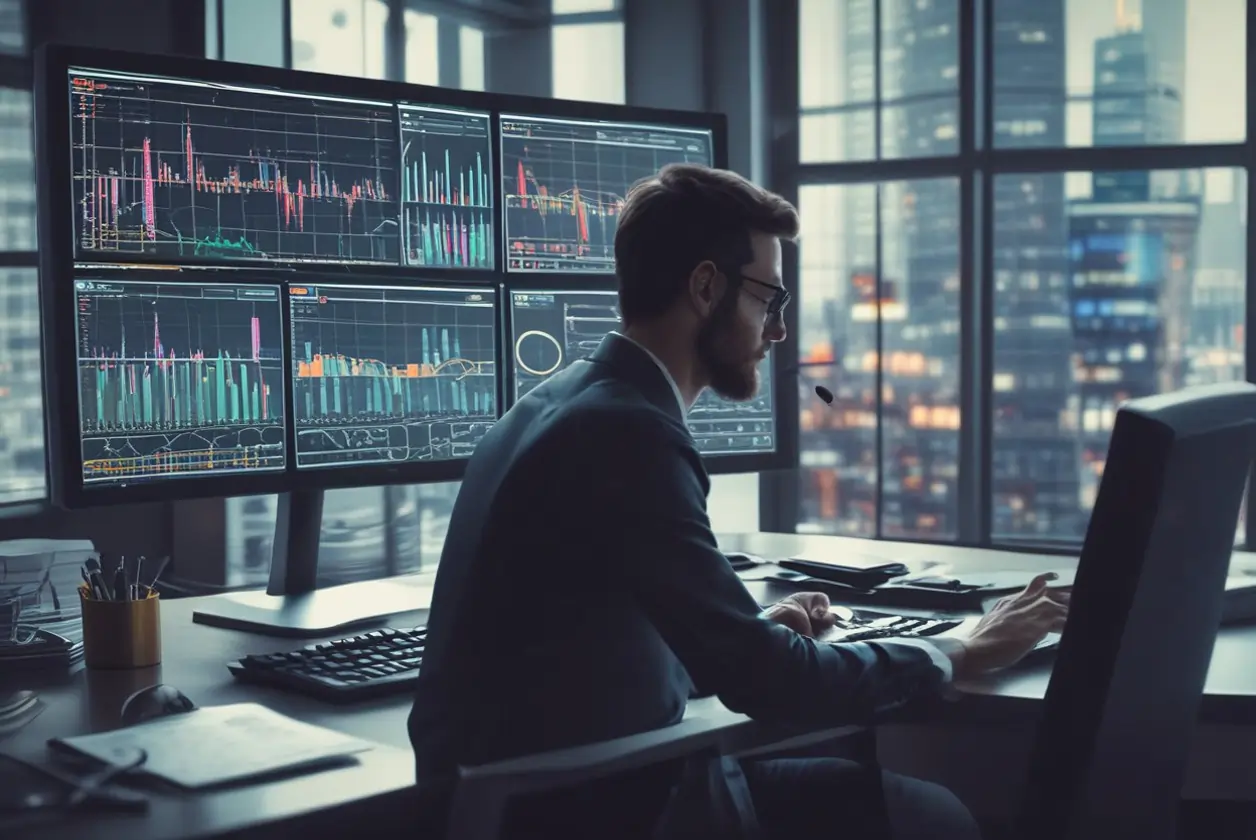
AI Trading vs Manual Trading: Compare, Risk,Guide
The rise of artificial intelligence has transformed financial markets worldwide, including India. Retail traders now have access to automation tools that were once reserved for hedge funds and institutional players. As a result, a critical question has emerged:
AI trading vs manual trading — which approach is better for Indian traders?
Both methods have strengths and limitations. Understanding the difference can help you choose the right strategy based on your experience, capital, and risk tolerance. How to Start AI Trading in India 2026 You Need To Pro Trader
Let’s break it down clearly and practically.
What Is AI Trading?
AI trading refers to using artificial intelligence and algorithmic systems to analyze market data and execute trades automatically. These systems process historical prices, technical indicators, volume patterns, and sometimes even sentiment data.
Instead of manually placing orders, the AI system executes trades based on predefined logic or machine learning models.
In India, AI trading typically operates through broker APIs provided by registered platforms. Traders either build their own strategies or use approved automation tools to run systematic trades.
The core advantage of AI trading is consistency. The system follows rules strictly without emotional interference.

What Is Manual Trading?
Manual trading relies entirely on human analysis and decision-making. The trader studies charts, reads news, applies indicators, and decides when to enter or exit a trade.
Many experienced traders prefer manual trading because it allows flexibility. If market conditions change suddenly, they can adjust instantly without waiting for a model update.
However, manual trading depends heavily on emotional discipline. Fear, greed, hesitation, and overconfidence can directly affect performance.
Speed and Execution
Speed is one of the biggest differences between AI trading and manual trading.
AI systems execute trades in milliseconds. In fast-moving markets like options or intraday equity trading, this speed can reduce slippage and improve entry accuracy.
Manual traders, no matter how experienced, cannot match algorithmic execution speed. Even a few seconds of delay may affect results in volatile conditions.
For traders focusing on short-term strategies, AI trading has a clear execution advantage.
Emotional Discipline
Markets are driven by psychology. Emotional mistakes are among the most common reasons traders lose money.
Manual traders often:
- Exit winning trades too early
- Hold losing trades too long
- Increase risk after a winning streak
- Panic during market crashes
AI trading eliminates emotional bias. It executes trades strictly according to programmed conditions.
However, experienced manual traders who have strong psychological discipline can also manage emotions effectively. Beginners, on the other hand, often struggle with emotional control.
In terms of emotional neutrality, AI trading has the edge.
Adaptability to Market Changes
Markets constantly evolve. Economic policies change, global events occur, and volatility shifts.
Manual traders can adapt quickly. If they sense unusual market behavior, they can stop trading or modify their approach immediately.
AI systems require strategy updates or retraining when market conditions change significantly. Some advanced models adapt automatically, but many retail AI tools rely on fixed parameters.
In unpredictable environments, human judgment sometimes performs better.
Data Processing Capability
AI trading systems can process massive amounts of data simultaneously. They can analyze years of historical information, correlations across multiple assets, and statistical probabilities.
A manual trader cannot realistically analyze thousands of data points in real time.
For data-heavy quantitative strategies, AI trading provides a clear analytical advantage.
Risk Management
Both AI and manual trading require strict risk management.
AI systems can automatically apply:
- Stop-loss levels
- Position sizing rules
- Maximum exposure limits
Manual traders must implement these controls themselves. While disciplined traders follow rules strictly, emotional decisions sometimes override risk management.
However, poorly programmed AI systems can scale losses quickly if not monitored properly.
The safest approach is often supervised automation, where traders monitor AI systems rather than blindly trusting them. Is AI Trading Legal in India? SEBI Rules & Compliance Guide 2026
Capital and Technical Requirements
Manual trading is easier to start. All you need is:
- A trading account
- Basic charting knowledge
- Internet access
AI trading requires additional setup:
- Broker API access
- Strategy logic
- Testing and monitoring
While AI trading offers scalability, manual trading has a lower technical barrier to entry.
For beginners, manual trading may be simpler initially. AI trading suits traders willing to invest time in learning systems.
Cost Considerations
Manual trading involves brokerage fees and transaction costs.
AI trading may involve:
- Platform subscription fees
- Data costs
- Cloud hosting (if required)
Although AI trading can improve efficiency, it may increase operational costs. Traders should evaluate whether performance improvements justify the expense.
Which Is Better for Indian Traders?
There is no universal answer. The better approach depends on your goals and personality.
AI trading is ideal for:
- Traders who prefer systematic rules
- Those managing multiple instruments
- Traders who struggle with emotional control
- Individuals interested in quantitative strategies
Manual trading is better for:
- Beginners learning market fundamentals
- Traders relying on macroeconomic insights
- Individuals comfortable with discretionary decisions
Many successful traders in India combine both approaches. They use AI systems for screening and execution while applying human judgment for supervision. Best Ai Trading Apps.
The Hybrid Approach: The Smart Middle Ground
The future of trading in India is likely hybrid.
Instead of choosing between AI trading and manual trading, many traders integrate both. For example:
- AI identifies trade opportunities
- The trader reviews and confirms entries
- Risk management rules are automated
- Strategy adjustments are human-controlled
This combination provides efficiency while retaining flexibility.
As markets become more data-driven, AI tools will likely become standard components of trading workflows. However, human intelligence will continue to play a vital role.
Final Verdict
AI trading vs manual trading is not about right or wrong. It is about choosing the approach that aligns with your skill level, discipline, and trading objectives.
AI trading offers speed, consistency, and emotion-free execution. Manual trading provides adaptability, intuition, and direct control.
For most Indian traders in 2026, the most effective strategy may not be choosing one exclusively, but understanding both and applying them strategically.
The key is discipline, risk management, and continuous learning regardless of the method you choose. Our Free Ai Tools List Visit.
FAQs
Is AI trading better than manual trading?
AI trading is faster and emotion-free, while manual trading offers flexibility and human judgment. The better option depends on your experience and strategy.
Can beginners start with AI trading in India?
Yes, beginners can use broker-approved AI tools, but they should understand risk management before deploying automated systems.
Which requires more capital: AI or manual trading?
Both can start with small capital, but AI trading may involve additional platform or infrastructure costs.

I am Md Amon Sk, a Website Developer with 2 years of experience. As part of the Choosfy Team, I focus on building quality websites and sharing the latest insights on AI tools.
3 thoughts on “AI Trading vs Manual Trading: Which Is Better for Indian Traders in 2026?”
Comments are closed.