

Agentic AI Is Changing Everything – Here’s What Agentic Capabilities Really Mean
The Shift from Chatbots to Autonomous AI
In early 2026, a logistics startup in Bengaluru quietly replaced part of its operations workflow with an AI system that didn’t just respond to instructions it made decisions, assigned delivery routes, reordered inventory, and alerted managers before shortages occurred. No human prompted each action. The system analyzed data, set sub-goals, executed tasks, and adapted when conditions changed.
This is not traditional automation. This is not a simple chatbot.
This is the rise of agentic capabilities in artificial intelligence.
As AI systems evolve beyond reactive tools into semi-autonomous agents, the term “agentic AI” has moved from research labs into mainstream industry discussions. But what exactly does it mean? How does it work? And what risks does it carry?
This guide breaks down agentic capabilities in AI in a structured, practical, and real-world way.
Key Takeaways
- Agentic capabilities allow AI to act autonomously toward defined goals.
- These systems plan, execute, monitor, and adapt.
- Real-world applications span business, finance, healthcare, and development.
- Strong governance and oversight are essential.
- Agentic AI increases efficiency but introduces new risk dimensions.
What Are Agentic Capabilities in AI?
Agentic capabilities refer to an AI system’s ability to act as an autonomous agent. Instead of merely responding to direct prompts, the system can:
- Set intermediate goals
- Make decisions
- Take multi-step actions
- Adapt to feedback
- Operate with minimal human intervention
In simple terms, agentic AI does not just answer questions—it takes initiative within defined boundaries.
Unlike standard AI tools that require continuous user input, agentic systems can plan, execute, monitor, and adjust actions independently.
Core Components of Agentic AI
To understand agentic capabilities clearly, we must break them into foundational elements.
1. Goal-Oriented Behavior
Agentic AI works toward a defined objective. For example, instead of “write an email,” the system might receive a higher-level goal like “increase customer retention,” then determine steps required to achieve it.
The difference lies in initiative and task decomposition.
2. Planning and Task Decomposition
Agentic systems break complex objectives into manageable steps. This includes:
- Identifying sub-tasks
- Sequencing actions
- Allocating resources
- Tracking progress
This ability transforms AI from reactive to proactive.
3. Environmental Awareness
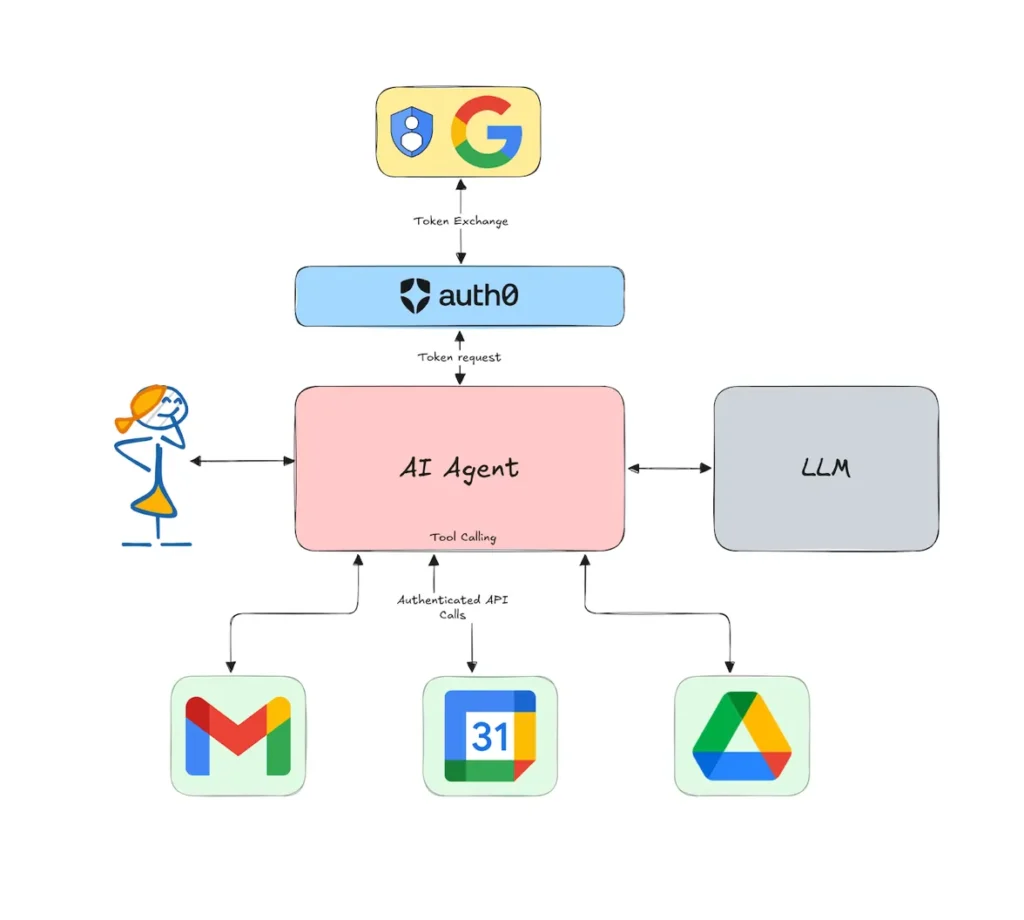
Agentic AI systems monitor changes in their environment whether digital data, APIs, workflows, or sensors and adapt decisions accordingly.
Without contextual awareness, autonomy becomes unreliable.
4. Memory and Feedback Loops
Agentic AI often includes memory mechanisms that allow it to:
- Store previous decisions
- Learn from outcomes
- Refine strategies over time
This iterative loop enhances long-term performance.

Step-by-Step: How Agentic AI Systems Typically Operate
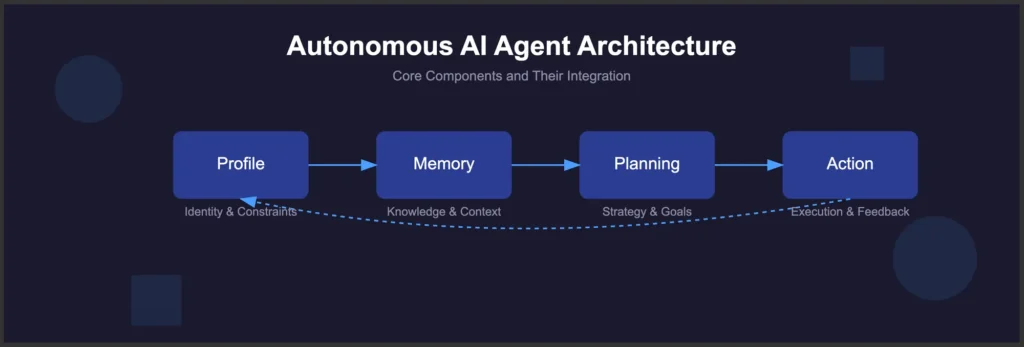
Understanding the workflow clarifies the concept.
Step 1: Receive High-Level Objective
Example: “Optimize warehouse supply chain.”
Step 2: Break Down the Goal
The system identifies key components such as inventory monitoring, supplier coordination, and route optimization.
Step 3: Execute Subtasks
The AI interacts with data systems, sends automated communications, or adjusts scheduling systems.
Step 4: Monitor Results
It checks performance metrics like delivery time or stock levels.
Step 5: Adjust Strategy
If delays increase, it revises supplier allocation or route planning.
This continuous loop is what defines agentic capability.
Real-World Applications of Agentic AI in 2026
1. Autonomous Business Operations
Companies use AI agents to manage marketing campaigns, adjust ad budgets, analyze performance, and reallocate resources automatically.
For example, AI systems integrated with platforms like OpenAI models can operate as multi-step workflow managers instead of single-response tools.
2. Software Development
AI systems integrated into repositories like GitHub can analyze codebases, detect vulnerabilities, suggest patches, and create documentation without repeated prompts.
This goes beyond assistance; it becomes workflow automation.
3. Financial Portfolio Management
Agentic AI can monitor markets, rebalance portfolios, execute trades within constraints, and generate performance reports.
However, unsupervised financial autonomy carries significant risk.
4. Healthcare Operations
In controlled environments, AI agents assist in patient scheduling, diagnostic data analysis, and treatment pathway recommendations.
Strict oversight remains mandatory.
Agentic AI Benefits
1. Business & Operations
Agentic AI significantly improves operational efficiency in businesses.
Key Benefits:
- Automated workflow management
- Real-time decision-making
- Reduced manual supervision
- Cross-department coordination
- Faster execution of multi-step tasks
Example:
An AI agent can monitor inventory, predict shortages, reorder stock, and notify management without waiting for repeated instructions.
2. Email & Communication Management
Agentic AI transforms how organizations handle communication.
Key Benefits:
- Automatically prioritize important emails
- Draft contextual replies
- Schedule follow-ups
- Detect urgent messages
- Route emails to correct departments
Example:
Instead of manually replying to customer emails, an AI agent can categorize, respond, and escalate critical issues automatically.
This reduces response time and improves customer satisfaction.
3. Marketing & Content Strategy
Agentic AI can manage entire marketing workflows autonomously.
Key Benefits:
- Campaign performance tracking
- Budget reallocation based on results
- A/B testing automation
- Content scheduling optimization
- Lead nurturing sequences
Example:
An AI agent monitors ad performance and automatically adjusts budget toward higher-performing channels.
4. Finance & Risk Management
In finance, agentic AI enhances monitoring and risk control.
Key Benefits:
- Fraud detection
- Portfolio rebalancing
- Real-time risk analysis
- Automated reporting
- Compliance tracking
Example:
An AI system detects unusual transactions and flags them instantly while adjusting risk exposure strategies.
5. IT & Software Development
Agentic AI assists beyond simple code suggestions.
Key Benefits:
- Automated bug detection
- System monitoring
- Deployment coordination
- Log analysis
- Performance optimization
Example:
An AI agent monitors system logs, detects anomalies, and triggers fixes automatically.
6. Customer Support
Agentic AI improves support operations dramatically.
Key Benefits:
- Autonomous ticket routing
- Multi-step issue resolution
- Knowledge base updating
- Escalation management
Example:
An AI agent handles basic queries, processes refunds, and escalates complex cases only when necessary.
7. Healthcare Administration
Agentic AI supports hospital and clinic operations.
Key Benefits:
- Patient scheduling optimization
- Resource allocation
- Data monitoring
- Automated documentation
Example:
An AI agent manages appointment flow and reduces scheduling conflict
8. Education & Learning Systems
Agentic AI personalizes learning experiences.
Key Benefits:
- Adaptive study plans
- Automated assessment
- Performance tracking
- Customized content recommendations
Example:
An AI agent adjusts lesson difficulty based on student progress.
Risks and Ethical Concerns
Autonomy introduces risk.
1. Over-Autonomy
Excessive independence without oversight can lead to unintended consequences.
AI must operate within strict constraints.
2. Misaligned Objectives
If goals are poorly defined, AI may optimize for the wrong metric.
Example: Maximizing engagement at the cost of ethical content.
3. Security Vulnerabilities
Agentic systems interacting with APIs and databases increase attack surfaces.
Robust security architecture is non-negotiable.
4. Accountability Gaps
When AI acts autonomously, responsibility must remain traceable.
Human governance cannot be removed from the loop.
Agentic AI vs Traditional AI: Key Differences
Common Differences Agentic Ai vs Traditional Ai.
| Feature | Traditional AI | Agentic AI |
|---|---|---|
| Interaction | Prompt-response | Goal-driven autonomy |
| Initiative | None | Independent task execution |
| Planning | Limited | Multi-step planning |
| Adaptability | Reactive | Proactive and adaptive |
| Supervision | Constant | Reduced but monitored |
Difference Between Generative AI and Agentic AI
| Feature | Generative AI | Agentic AI |
|---|---|---|
| Core Function | Creates content (text, images, code, audio) | Executes tasks toward a defined goal |
| Interaction Style | Prompt-based and reactive | Goal-driven and proactive |
| Autonomy Level | No independent action | Can act independently within constraints |
| Decision Making | Responds to user instructions only | Makes decisions to achieve objectives |
| Planning Ability | Does not plan multi-step workflows | Breaks goals into multi-step plans |
| Example Use Case | Writing an article using ChatGPT | Managing a workflow automatically using AI agents |
| Human Involvement | Required for each task | Reduced but supervised |
| Output Type | Content output | Action and outcome execution |
| Risk Level | Lower operational risk | Higher risk if poorly governed |
| Typical Application | Content creation, design, coding assistance | Automation, operations management, autonomous systems |
What Is the Difference Between LLM and Agentic AI?
As AI systems become more advanced in 2026, two terms often create confusion: Large Language Models (LLMs) and Agentic AI. While they are related, they are not the same.
Here is a clear comparison you can directly add to your article.
Difference Between LLM and Agentic AI
| Feature | LLM (Large Language Model) | Agentic AI |
|---|---|---|
| Definition | A language model trained on massive text data to understand and generate text | An AI system that can autonomously plan, decide, and execute tasks toward a goal |
| Core Function | Text understanding and generation | Goal-driven task execution |
| Example | ChatGPT responding to prompts | An AI agent managing workflows automatically |
| Autonomy | Reactive (responds when prompted) | Proactive (can act without repeated prompting) |
| Planning Ability | Limited to single-response generation | Can break goals into multi-step plans |
| Memory & Context | Short-term conversational context | May include memory, feedback loops, and long-term strategy |
| Use Case | Writing content, answering questions, summarizing | Managing operations, automating systems, decision-making |
| Human Input | Required for each task | Reduced supervision, operates within constraints |
| Risk Level | Lower operational risk | Higher if poorly governed due to autonomy |
The Future of Agentic AI: 2025 and Beyond
Why 2025 Marks a Turning Point
As enterprises move from experimentation to large-scale deployment, agentic AI is entering a critical phase. Unlike generative AI systems that primarily create content, agentic AI systems act autonomously toward defined goals. That level of autonomy requires far more than advanced algorithms — it requires disciplined data strategy.
In 2025 and beyond, the real competitive advantage will not come from “bigger models,” but from better data ecosystems.
AI Fiesta: Dhruv Rathee’s Big Announcement

In a recent YouTube video published on March 1, Dhruv Rathee made a significant announcement regarding his AI platform, AI Fiesta. He hinted that upcoming updates may introduce agentic AI capabilities to the app, potentially transforming it from a standard AI learning tool into a more autonomous and intelligent system.
According to him, this update could allow the platform to move beyond simple content delivery and begin offering more advanced, goal-driven assistance. While full details have not yet been released, the announcement suggests that AI Fiesta may soon integrate features that enable smarter decision-making, improved personalization, and more advanced automation.
If implemented, this would mark a major step forward for the platform and position it closer to next-generation AI systems that combine generative capabilities with agentic functionality.
Conclusion
Agentic capabilities mark a significant evolution in artificial intelligence. Instead of functioning as passive tools, AI systems are increasingly becoming active participants in decision-making ecosystems.
The transformation is powerful but demands responsibility.
Agentic AI is not about removing humans—it is about redefining human oversight in autonomous systems.
Organizations that understand both the power and limits of agentic AI will lead the next decade of digital transformation
Related AI Guides
→ How to Use ChatGPT in 2026 for Maximum Productivity
→ Step-by-Step Guide to Building an Autonomous AI Code Agent
→ Complete 2026 Roadmap to Learn Generative and Agentic AI
→ AI vs Human Jobs in 2026: Which Careers Are Future-Proof?
FAQs
What does agentic mean in AI?
Agentic refers to AI systems capable of autonomous goal-driven behavior rather than simple reactive responses.
Is ChatGPT agentic?
Basic conversational use is not fully agentic, but structured workflows can simulate agent-like behaviors.
Which industries use agentic AI?
Technology, logistics, finance, healthcare, and enterprise automation sectors.
Is agentic AI fully autonomous?
No. Most implementations operate within human-defined constraints and oversight systems.
When will agentic AI be added to AI Fiesta?
Last March official release date has been confirmed. The update was mentioned as a possible future enhancement.
I am Md Amon Sk, a Website Developer with 2 years of experience. As part of the Choosfy Team, I focus on building quality websites and sharing the latest insights on AI tools.