
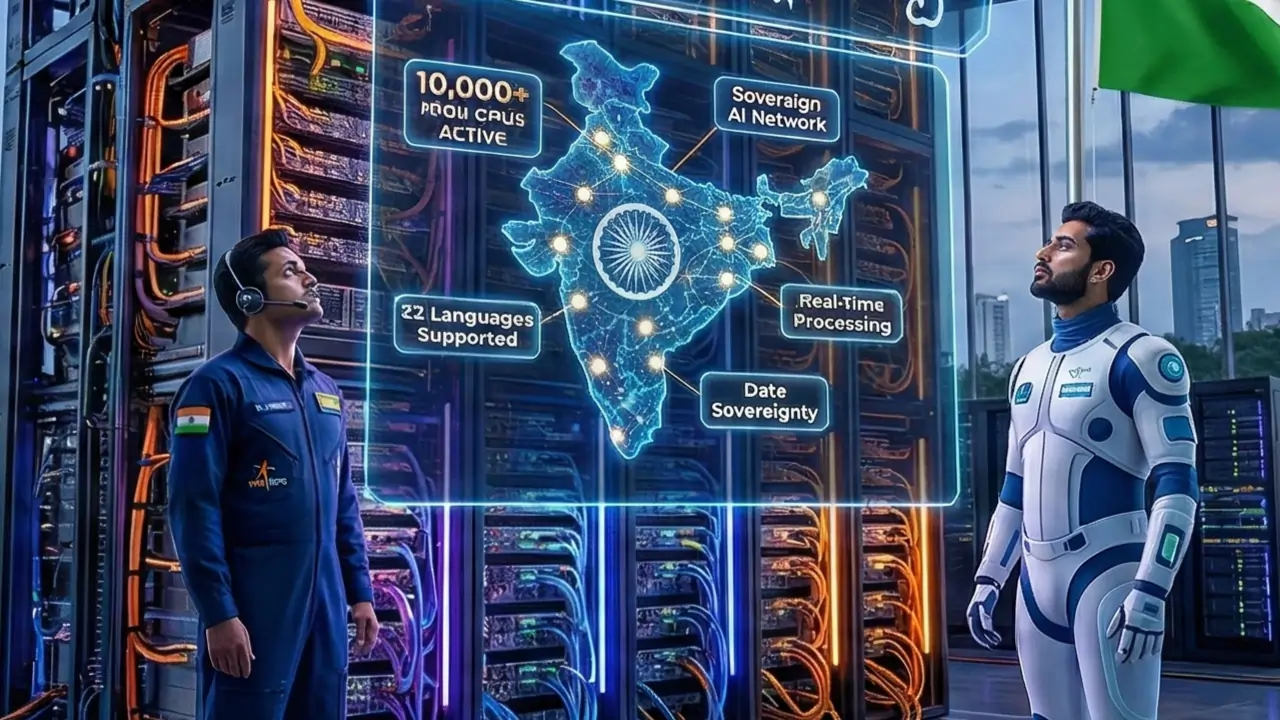
It is one of the greatest ironies of the modern tech era. India is the world’s premier back-office, the engine room that keeps Silicon Valley humming. We produce the CEOs of Google, Microsoft, and Adobe. Our engineers make up a massive percentage of the workforce at OpenAI and Meta. Yet, when the world talks about Generative AI, the names that dominate ChatGPT, Claude, Gemini are all American.
So, why hasn’t India built a Desi GPT that rules the global charts? Is it a lack of brainpower? The answer is a resounding no. It isn’t a lack of talent; it is a lack of the Physicality of AI.
To understand why India is playing catch-up, we need to look beyond the code and into the heavy machinery, the massive capital, and the complex linguistics that define the AI race. This article dives into the four critical “Gaps” holding India back: Money, Resources, Scientists, and Policy.
The Major Reasons India Has Not Built a ChatGPT-Level AI
India has strong tech talent and a growing digital economy, yet building a ChatGPT-level AI requires far more than coding expertise. From massive compute infrastructure to long-term funding and semiconductor capacity, several structural challenges have slowed India’s progress in developing a frontier large language model.
The Resource War: The GPU Hunger
In the world of AI, GPUs (Graphics Processing Units) are the new oil. Without them, an AI model cannot think. To build something like GPT-4, you don’t just need a few powerful computers; you need an industrial-scale “AI Factory.”
The NVIDIA Monopoly
The gold standard for AI training is the NVIDIA H100 chip. Training a model of ChatGPT’s caliber requires an estimated 20,000 to 30,000 of these chips working in perfect synchronization.
- The Price Tag: A single NVIDIA H100 chip costs between $30,000 and $40,000 (roughly ₹25–33 Lakhs).
- The Scaling Problem: For an Indian startup to build a world-class cluster of 20,000 chips, the hardware cost alone would exceed $600 million (₹5,000 Crore). This doesn’t include the cost of the building, the specialized networking, or the massive electricity bills.
Energy and Cooling
It’s not just about buying the chips; it’s about keeping them alive. High-end AI chips generate immense heat. In India’s tropical climate, the cost of cooling a data center can be 40% higher than in cooler regions. India is only now scaling up its “Hyperscale” data centers that can handle the power density required for Generative AI.
The Money Problem: High-Stakes Gambling
Building a foundational AI model is a “burn-first, earn-later” business. In the US, venture capital (VC) firms are comfortable with “Moonshot” projects.
- The Funding Gap: Microsoft has poured over $13 billion into OpenAI. In contrast, total VC funding for all Indian AI startups combined is just a fraction of that.
- The Investor Mindset: Indian investors traditionally prefer safe bets startups with clear revenue paths like Fintech or E-commerce. An LLM (Large Language Model) might burn through ₹1,000 Crore before it even generates its first coherent sentence. This financial risk-aversion has historically kept India out of the foundational model race.
The Scientist Dilemma: Brain Drain and Talent Export
India produces more STEM graduates than almost any other nation, but we face a massive Scientific Brain Drain.
- The Salary Gap: An AI researcher in San Francisco or London can earn upwards of $500,000 (₹4 Crore+) a year. Matching those salaries in Bengaluru or Hyderabad is an impossible financial strain for most Indian startups.
- Service vs. Product: For decades, the Indian tech ecosystem has been focused on Service (fixing software for global clients) rather than Product (building original architectures). We have millions of AI implementers who know how to use API keys, but we have a shortage of “Foundational Researchers” who can build the math behind the models from scratch.

The Political and Data Challenge: Why English Isn’t Enough
ChatGPT is primarily English-first. While it can speak Hindi or Bengali, its internal logic is built on Western datasets. For India, a ChatGPT-clone isn’t enough; we need an AI that understands the soul of the country.
The Language Barrier
India has 22 official languages and over 1,600 dialects. Most global AI models are trained on English-heavy internet scrapes.
- The Digitization Gap: Much of India’s deepest knowledge historical texts, local governance records, and regional literature is still on paper or in unorganized digital formats.
- Political Sensitivity: AI models often carry the biases of their creators. India needs Sovereign AI to ensure that Indian cultural and political nuances are not filtered through a Western lens.
The Silver Lining: Meet the Homegrown Challengers
The narrative is changing in 2026. India has realized that it cannot afford to be AI-dependent on the West. Just as we built ISRO and UPI, we are now building our own AI ecosystem.
| Challenger | Focus Area | Why it Matters |
| Krutrim (Ola) | 22+ Indian Languages | India’s first AI Unicorn; trained on 2 trillion Indian tokens. |
| Hanooman (SML) | Multimodal Indic AI | Focuses on healthcare and governance in regional dialects. |
| Sarvam AI | Efficiency | Building small, voice-first models for the Indian masses. |
| IndiaAI Mission | Infrastructure | A ₹10,300 Crore gov’t push to provide 10,000+ GPUs to startups. |
Government AI Initiatives in India
1. National AI Policies
- India’s national AI strategy was led by NITI Aayog.
- Focus areas: healthcare, agriculture, education, smart mobility, and smart cities.
- Emphasis on “AI for All” inclusive and socially impactful AI development.
- Push for responsible AI, ethics framework, and data governance standards.
2. Semiconductor Mission
- The Indian government launched the India Semiconductor Mission (ISM) to reduce dependence on imported chips.
- Incentives for semiconductor manufacturing and chip design in India.
- Goal: Build domestic fabrication plants (fabs) and strengthen supply chains.
- Critical for AI because advanced GPUs and AI chips are infrastructure backbones.
3. IndiaAI Mission
- The IndiaAI Mission aims to build a strong AI ecosystem in India.
- Investment in compute infrastructure and AI research.
- Support for startups, academia, and indigenous Large Language Models (LLMs).
- Focus on creating sovereign AI capabilities.
4. Public–Private Collaboration Efforts
- Partnerships between government bodies, startups, and Big Tech firms.
- Encouraging AI innovation hubs and research labs.
- Cloud and compute infrastructure support through private tech companies.
- Aim: Accelerate AI adoption across industries and governance.
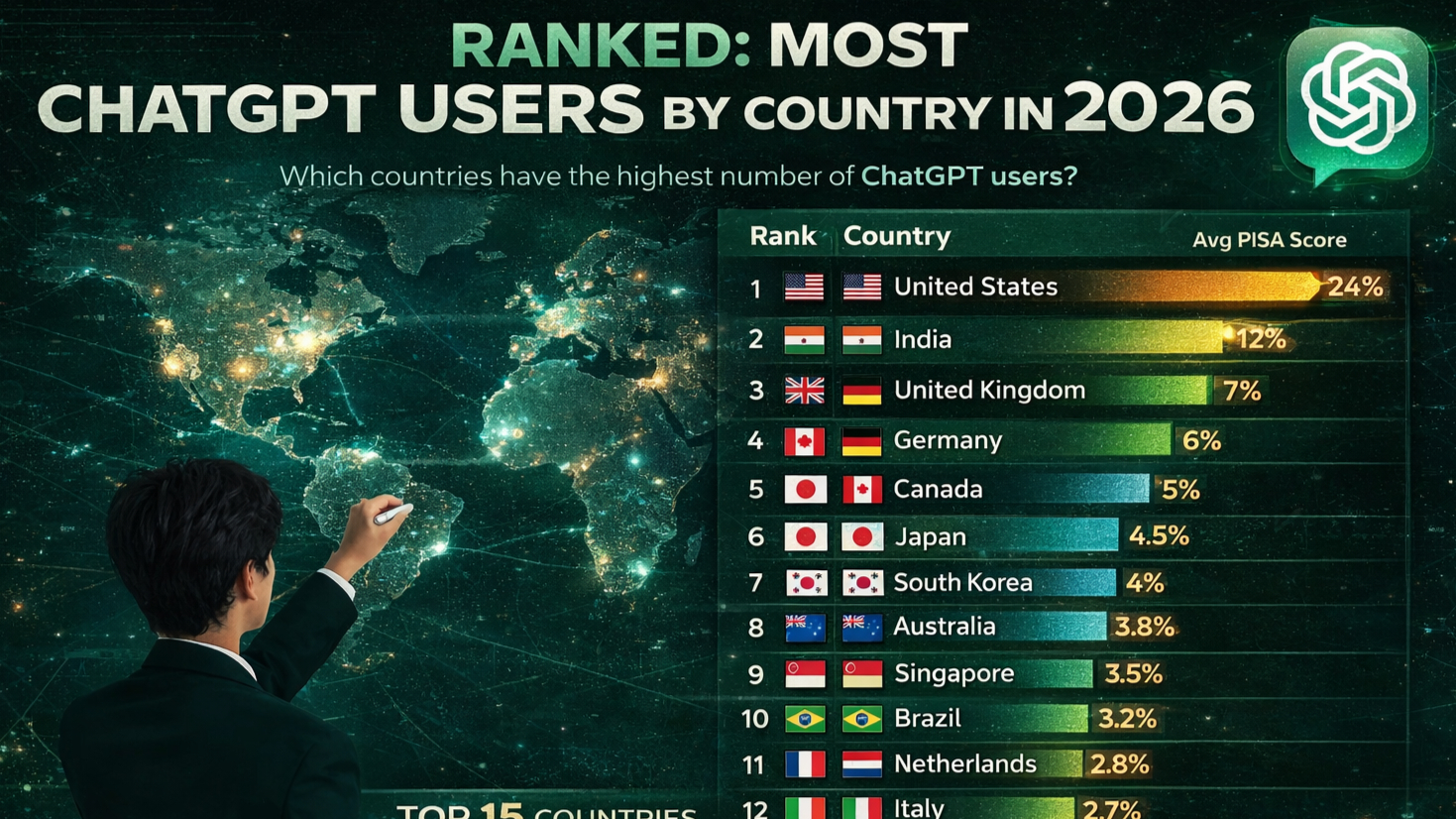
What It Takes to Build a ChatGPT-Level AI
Building a ChatGPT-level AI model is not just a software project it is a massive technological undertaking that requires infrastructure, capital, and long-term research commitment.
Massive Compute Power (GPU Clusters)
Training large language models requires thousands of high-performance GPUs running in parallel for weeks or even months. These GPU clusters consume enormous amounts of electricity and require advanced data center infrastructure with cooling and networking systems.
Billions in Funding
Developing frontier AI models demands billions of dollars in investment. Costs include hardware procurement, cloud infrastructure, top-tier research talent, data acquisition, and continuous model improvement.
Large-Scale Training Data
Advanced AI systems are trained on vast datasets containing text, code, and diverse knowledge sources. Collecting, cleaning, and processing this data at scale is both technically complex and expensive.
Years of R&D
Such models are built through years of experimentation, research breakthroughs, and iterative improvements. It requires experienced AI scientists, engineers, and sustained innovation cycles not just short-term development efforts.
Together, these elements explain why building a ChatGPT-level AI is a trillion-dollar ecosystem challenge, not a simple app development task.
Conclusion: It’s Not a Race to Copy, It’s a Race to Solve
India might never build a Better ChatGPT for writing Shakespearean sonnets in English. But India is likely to win in Vertical AI.
Instead of one giant bot that does everything, India is building AI for:
- Agriculture: Helping farmers diagnose crop diseases in their local dialect.
- Education: Personalized AI tutors for students in rural villages.
- Governance: Simplifying complex legal and administrative tasks for 1.4 billion people.
The Bottom Line: The “Trillion-Dollar Infrastructure Gap” is real, but it is closing. India isn’t just building a chatbot; it’s building an AI-powered nation designed to solve the unique, complex problems of the global south.
I am Md Amon Sk, a Website Developer with 2 years of experience. As part of the Choosfy Team, I focus on building quality websites and sharing the latest insights on AI tools.

1 thought on “Why Hasn’t India Built a ChatGPT-Level AI Yet?”
Comments are closed.