
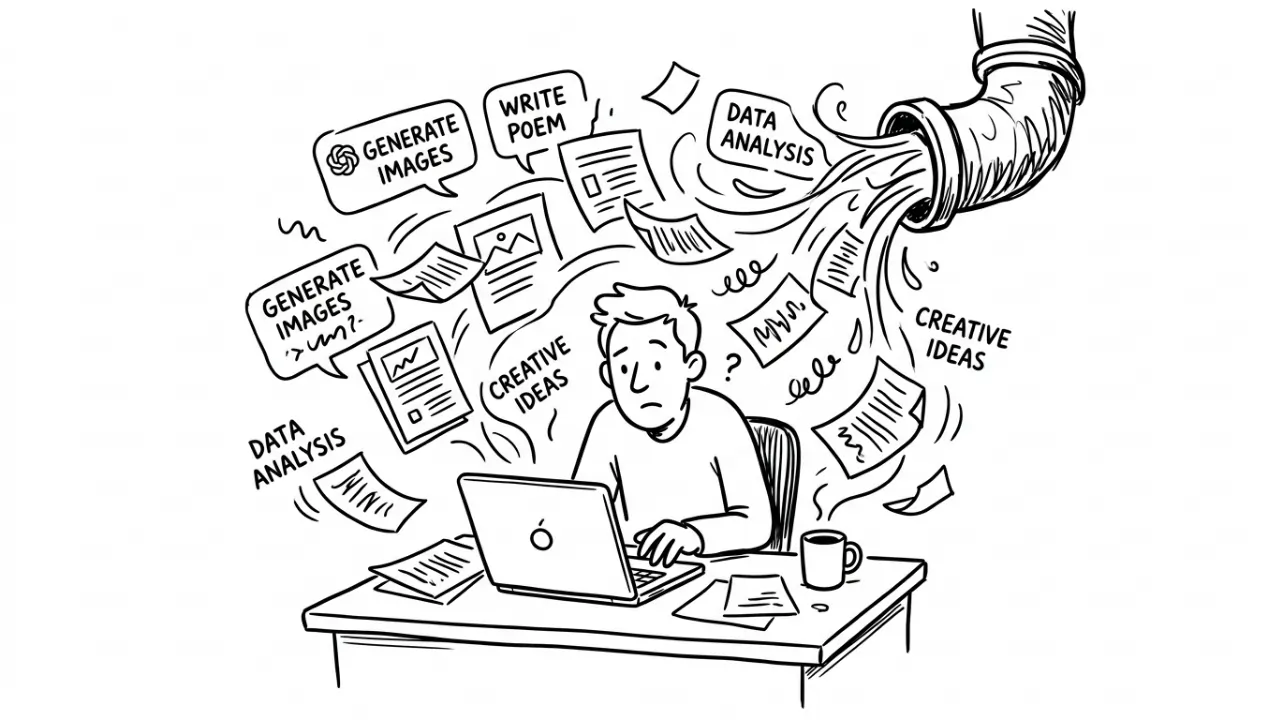
Artificial intelligence tools have become a major part of everyday digital life. Millions of people now rely on AI assistants such as ChatGPT, Claude, and other AI-powered platforms for writing, research, coding, and productivity. However, experts say that many users are not taking full advantage of these tools because they are using them incorrectly.
Instead of simply asking short or vague questions, professionals who work with artificial intelligence recommend using smarter prompting strategies. With the right approach, AI tools can become significantly more powerful and useful for solving complex problems, generating ideas, and improving productivity.
Here are four simple techniques that can help you use AI tools more effectively.

Why Many People Use AI Tools Inefficiently
AI assistants are designed to understand natural language, but their responses depend heavily on the clarity and detail of the instructions they receive. When users provide limited context or vague prompts, the AI may generate generic answers that are less helpful.
Learning how to communicate clearly with AI systems can dramatically improve the quality of results. Professionals often refer to this skill as prompt engineering—the practice of structuring prompts in ways that guide AI models toward better responses.
1. Give AI Clear Context Before Asking a Question
One of the most common mistakes users make is asking AI tools questions without providing enough background information. AI systems perform better when they understand the context of the task.
For example, instead of asking:
“Write an article about technology.”
You could provide more context:
“Write a 700-word technology article explaining how artificial intelligence is transforming digital marketing.”
Providing clear context helps the AI generate more accurate and relevant responses.

2. Ask AI to Act as an Expert
Another powerful technique is assigning the AI a specific role. By asking the AI to respond as an expert in a certain field, you can guide the style and depth of the response.
For example:
“Act as a cybersecurity expert and explain how businesses can protect themselves from AI-powered phishing attacks.”
This approach often leads to more structured, detailed, and professional responses.
3. Break Complex Tasks Into Smaller Steps
Many users expect AI to complete complex tasks in a single prompt. However, breaking tasks into smaller steps often produces better results.
For example, when creating an article, you might first ask the AI to generate an outline. Then, you can ask it to expand each section one by one. This step-by-step process helps maintain clarity and accuracy throughout the content.
Developers frequently use this technique when working with AI coding assistants to debug or build complex programs.

4. Refine and Improve AI Responses
AI tools are designed to support interactive conversations. Instead of accepting the first response as the final answer, users can ask follow-up questions to improve the output.
For example:
“Make the explanation simpler.”
“Add real-world examples.”
“Rewrite this in a professional tone.”
These adjustments allow users to gradually refine the response and achieve better results.
The Growing Importance of AI Literacy
As artificial intelligence becomes more integrated into workplaces and education, the ability to use AI tools effectively is becoming an important digital skill. Companies are increasingly encouraging employees to learn how to interact with AI systems to improve productivity and creativity.
Experts believe that individuals who understand how to use AI tools efficiently will have a significant advantage in the evolving digital economy.
Conclusion
AI tools have the potential to dramatically improve productivity, but their effectiveness depends on how they are used. By providing clear context, assigning expert roles, breaking tasks into steps, and refining responses, users can unlock the full potential of modern AI assistants.
As artificial intelligence continues to evolve, learning how to communicate effectively with AI systems may become one of the most valuable digital skills of the future.

I am Md Amon Sk, a Website Developer with 2 years of experience. As part of the Choosfy Team, I focus on building quality websites and sharing the latest insights on AI tools.

12 thoughts on “Most People Use AI Tools Wrong — Try These 4 Simple Tricks Instead”
Comments are closed.